
How Health Insurance Alternatives Can Save Your Small Business Money
Small businesses don’t have to accept rising premiums as the cost of offering benefits. Health insurance alternatives are giving employers a smarter, more sustainable way to support their teams.

In This Article
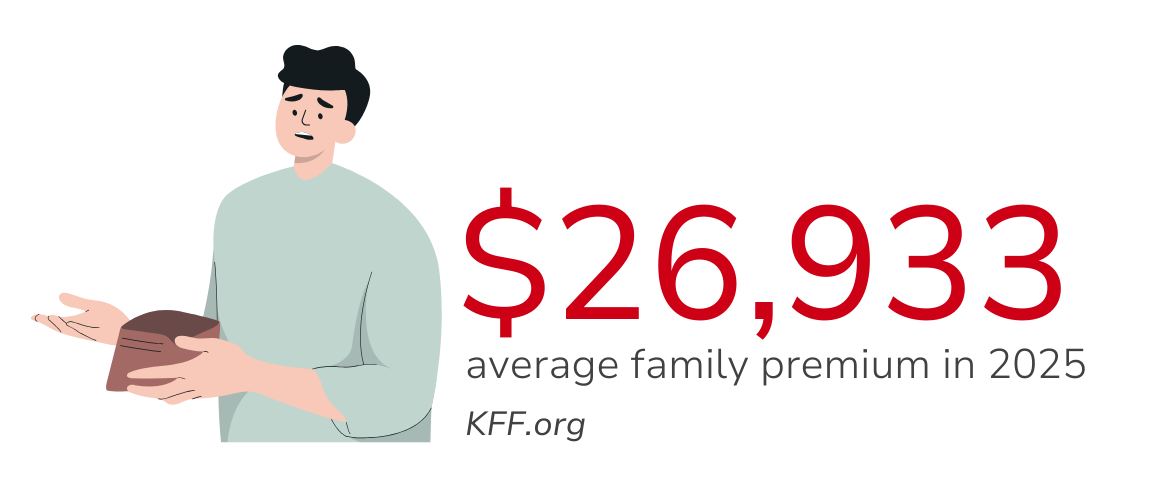
As health insurance continues to siphon resources and provide little strategic return, it has become one of the most burdensome aspects of running a small business. Premiums climb year over year, plan designs remain inflexible, and every renewal seems to come with an unwelcome surprise. According to the 2025 Employer Health Benefits Survey from the Kaiser Family Foundation, the average annual premium for employer-sponsored family coverage has reached $26,933, with single coverage averaging $9,325. These costs continue to rise faster than both wages and general inflation, placing outsized pressure on small employers and offering little in return but administrative complexity and employee dissatisfaction. What was once considered a competitive advantage has now become a financial gamble that many employers feel forced to take just to stay viable in a competitive labor market.
But continuing to absorb these costs isn’t sustainable—or necessary. The traditional group insurance model was built for large, centralized workforces in a different era and simply wasn’t designed to serve today’s small businesses. Modern businesses are lean, nimble, geographically dispersed, and composed of employees with a wide range of healthcare needs. Trying to fit modern teams into yesterday’s benefits framework leads to waste, frustration, and a growing sense that the system is rigged against small employers. Fortunately, there are alternatives that allow small businesses to regain control over both their budgets and their benefit offerings.
Why traditional group insurance no longer fits
Group insurance is, by design, one-size-fits-most, and small businesses are rarely the size or structure it was built for. These plans typically require a minimum percentage of employee participation, which forces employers to subsidize coverage that many workers may not want or need. Traditional plans remain geographically anchored, leaving remote, or out-of-state workers with limited access to care. Premiums rise annually, often with little transparency or rationale, leaving small business owners unable to forecast or contain benefit-related costs. According to a longstanding survey of small business owners by the National Federation of Independent Business (NFIB), the cost of health insurance consistently ranks as one of the top problems facing employers, especially in the face of unpredictable increases.
The issue isn’t that small businesses misunderstand how benefits should work, it’s that the traditional model was never built to serve them in the first place
The issue isn’t that small businesses misunderstand how benefits should work, it’s that the traditional model was never built to serve them in the first place. Employees may be left with high out-of-pocket expenses and narrow provider networks, while employers face ballooning premiums that don’t correlate with measurable plan performance or satisfaction. The end result is a system that frustrates everyone it touches, with neither side feeling they’re receiving real value.
A flexible model that reflects today’s workforce
Health insurance alternatives can offer a different path—one that acknowledges the reality of modern labor markets and evolving employee expectations. Instead of funneling all employees into a single, rigid group plan with unpredictable annual rate hikes, alternative strategies allow businesses to define their financial contribution and benefit structure up front. This might take the form of monthly stipends, health reimbursement arrangements (HRAs), defined contribution strategies (such as ICHRAs), direct primary care memberships, or health cost sharing programs (such as HealthShare membership). Each of these approaches offers a more tailored and controllable framework that aligns contributions with organizational capability rather than carrier pricing models.
In contrast to traditional employer-sponsored plans, which lock businesses into multi-year contracts and annual negotiations, nontraditional alternatives often provide month-to-month predictability, fewer administrative hurdles, and more control over how funds are used. For employees, this can translate to greater autonomy in selecting the providers and plans that make sense for their individual healthcare needs—often at a lower overall cost.
Rather than relying on a single solution, many employers combine strategies. For example, pairing a HealthShare with an HSA-qualified minimum essential coverage plan, offering stipends alongside virtual care, or integrating direct primary care membership with other health benefits. This isn’t just about savings. It’s about designing benefits that match how teams actually live and work while reducing waste and administrative friction.
HealthShares: A practical cost-sharing option
Among the growing array of health insurance alternatives, HealthShares (also known as health care sharing ministries or medical cost sharing communities) offer a compelling middle ground between traditional insurance and self-funded models. These programs are not insurance in the regulatory sense. Instead, members contribute a monthly amount to a shared pool, which is then used to help cover eligible medical expenses within the community. Unlike traditional insurance, HealthShares generally do not guarantee payment of claims, nor are they subject to the Affordable Care Act (ACA) coverage mandates, but they can provide meaningful financial support in a more transparent structure.
For small businesses that are priced out of traditional insurance—or that want to provide meaningful healthcare support without absorbing the full administrative and financial burden of a group plan—HealthShares offer an attractive option. Monthly contributions tend to be significantly lower than traditional premiums, and most HealthShares avoid restrictive provider networks entirely, allowing members to choose their clinicians and facilities. While formal surveys on HealthShare satisfaction are limited, member feedback consistently highlights high satisfaction with provider choice and transparency, even if participation requires a more proactive role in managing care.
That said, HealthShares are not right for every situation. They may have coverage limitations or eligibility guidelines that don’t match every employee’s healthcare needs. Still, for many individuals and families—especially those who want lower cost exposure and greater control over care decisions—HealthShares represent a viable alternative.
For small businesses that are priced out of traditional insurance—or that want to provide meaningful healthcare support without absorbing the full administrative and financial burden of a group plan—HealthShares offer an attractive option.
Rethinking the role of the employer
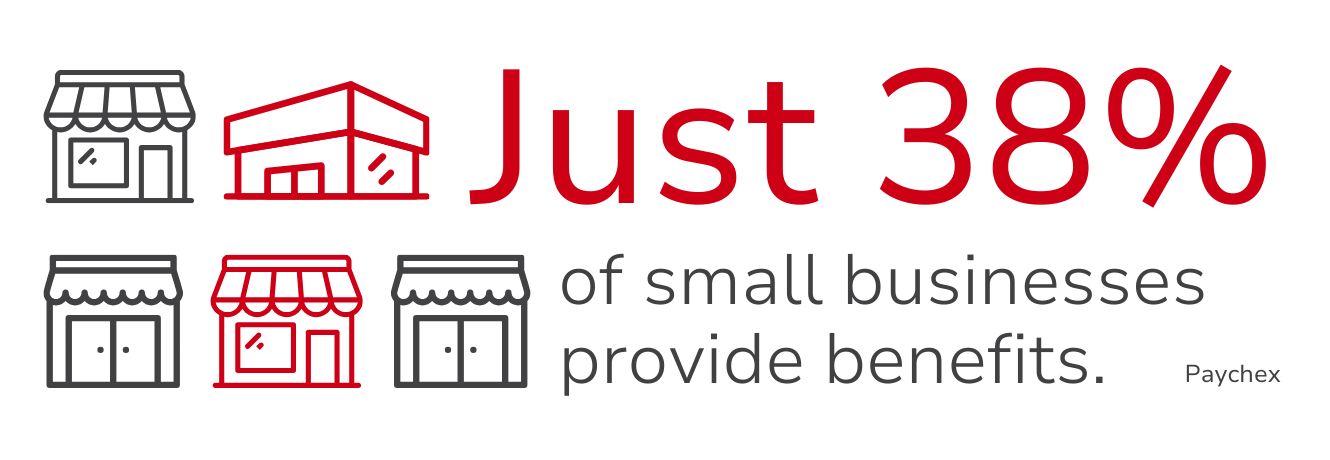
What makes these models transformative isn’t just that they reduce costs, it’s that they redefine the employer’s role. Traditional benefits ask small business owners to become de facto insurance administrators, absorbing risk, managing compliance, and navigating carrier bureaucracy. That structure makes little sense for businesses with fewer than 50 employees —and it’s a major reason many employers avoid offering benefits altogether.
In contrast, health insurance alternatives allow business owners to serve as benefit strategists rather than administrators. You provide structure, support, and investment—but you don’t carry the full burden of managing a failing system. You guide employees to options that make sense for them, while protecting your business from unsustainable commitments.
Choosing the right path
There is no single “best” solution for every small business. The right mix depends on your budget, the composition of your workforce, and your long-term goals. Some businesses thrive with a HealthShare-first approach. Others prefer to give employees a set amount to spend on the benefits they choose, or mix strategies to fit their needs. What matters most is partnering with a guide who understands the possible options, helps you avoid costly missteps, and builds a benefits strategy that reflects the reality of your business.
How Planstin helps
At Planstin, we don’t push one-size-fits-all plans or lock you into inflexible insurance contracts. We help employers navigate the full spectrum of benefits strategies, from traditional insurance to HealthShares and everything in between, so you can build a benefits approach that actually works for your people and your business.
We provide clarity on options, support on compliance and administration, and guidance on how to structure benefits in a way that aligns with your financial goals and your workforce needs.
Ready to stop fighting an outdated system and start building benefits that work?
Explore
SUGGESTED FOR YOU