
Why Telemedicine Is the Next Big Step for HSAs
Over 32 million people will benefit from HSA-compatible telemedicine under the new OBBBA law. Here’s why this change matters—and how it reshapes access to care.

In This Article
As we get rolling into 2026, recent changes to Health Savings Account (HSA) rules are changing how people receive and pay for care. The One Big Beautiful Bill Act (OBBBA) expanded HSA flexibility to make direct primary care (DPC) arrangements compatible with HSA’s. But DPC wasn’t the only beneficiary of the new legislation; the new laws also include telemedical care and qualify it as HSA-compatible.
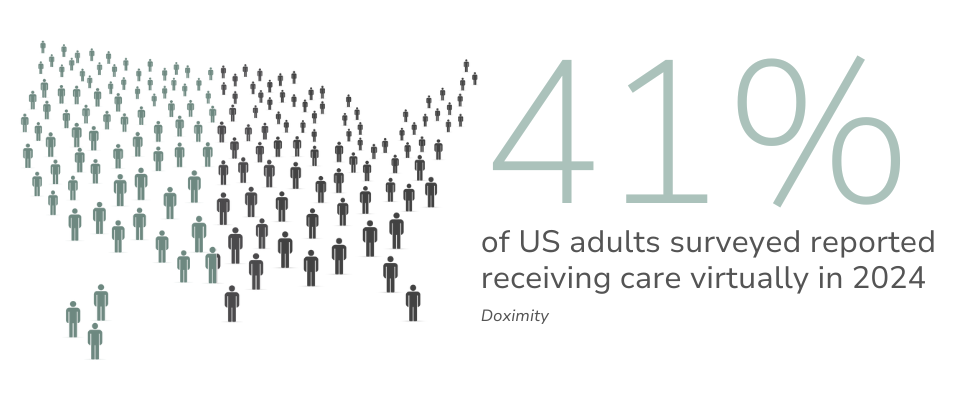
In the years since the pandemic, telemedicine has shifted from an emergency workaround to a mainstream mode of healthcare. Virtual visits with providers are now a regular option for primary care, mental health, and chronic condition management. But, unlike many of the temporary pandemic allowances, telemedicine hasn’t gone away. In fact, experts predict that its role in routine care will continue to expand in the coming years. Before 2020, fewer than 1% of all outpatient visits were conducted virtually in the US, whereas in 2024, 41% of US adults surveyed by Doximity reported receiving care virtually in the past year.
Out with the old: How Telemedicine fit into HSA rules before the new law
Before the OBBBA, how HSA’s interacted with nontraditional services like telemedical care was unclear. Under standard HSA rules, first-dollar coverage for non-preventive services, like virtual care visits, could disqualify someone from contributing to an HSA entirely. However, this changed with the CARES Act, which created a temporary safe harbor that allowed pre-deductible telemedicine visits without affecting eligibility. The problem was that this change was intended to be a temporary solution that expired.
Employers quickly adopted this change. A 2022 survey found that 96% of employers offered pre-deductible telemedicine access, with 76% supporting making this change permanent. This widespread adoption makes it clear that both employers and employees value the flexibility and convenience of virtual care.
In with the new: Telemedicine is now clearly HSA-Compatible
Now, with the OBBBA, Congress has permanently extended the telemedicine safe harbor for HSA’s and high-deductible health plans. Section 71306 of the bill clarifies that telemedicine and other remote care services can be used before the deductible is met without disqualifying a person from HSA eligibility.
This means that if your high-deductible health plan includes telemedicine (like virtual visits or remote consultations), you can use those services before your deductible has been met, and still contribute pre-tax dollars to your HSA, something that was not possible prior to the pandemic.
Industry trackers like the Alliance for Connected Care estimate that over 32 million people will benefit from telemedicine’s compatibility with HSA’s under the new law.
What this means for patients
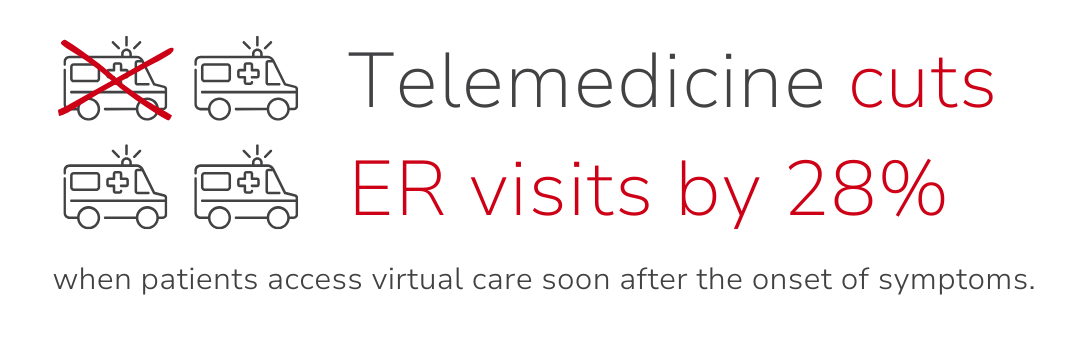
With telemedicine’s eligibility now clarified under the new law, patients face fewer barriers to care than ever before. Telemedicine can make it easier to get help early, especially for situations that benefit from being seen by a provider promptly. This means an increase in early intervention for serious illnesses and conditions, and a reduction in costly delays that might otherwise result in a visit to the emergency room or extended hospitalization. For example, research shows that telemedicine can cut emergency room visits by about 28% when patients can access virtual care soon after the onset of symptoms.
Aside from fundamental access to care, however, this shift in HSA eligibility will also mean an improvement in affordability and convenience. Patients generally report higher satisfaction with virtual care, which has a positive influence on follow-ups and chronic condition management (both of which are key drivers of long-term health outcomes). Studies of telemedical applications have found notable cost savings for patients, including reduced travel time and lower overall healthcare spending.
Combined with access to alternative models like direct primary care, telemedicine helps create a more accessible and affordable healthcare environment for HSA holders by reducing costs, allowing tax-free funds to be used, and easing logistical concerns for routine healthcare needs. This means patients can feel freer in making choices about when and how they seek care.
What's next?
It looks like nontraditional models of care like DPC and telemedicine are here to stay. In 2025, 91% of large employers reported offering virtual health or telemedicine services in some capacity, with many employers expanding their offerings beyond basic primary care.
Employees and individuals can now benefit from easier access, lower logistical barriers, and more predictable costs resulting from the new law. A 2024 KFF survey showed that 28% of employers see telemedicine as “very important” for future care delivery, with an additional 33% rating it as “important.” The more barriers that get knocked down, the more we can expect these nontraditional methods of healthcare to become fully integrated into standard care environments across the country.
There will always be a need for in-person care, but these alternative services like telemedicine serve as a convenient and affordable complement. But for those needs that are more routine and not urgent, such as preventive visits, chronic condition management, and primary care, we predict that telemedicine will become a permanent fixture in modern healthcare.
Interested in what adding virtual care can do for your benefits package? Let’s talk.
Explore
SUGGESTED FOR YOU