
How to Communicate Your Benefits Package Effectively to Your Employees
When communication works well, trust grows, engagement rises, and people feel confident that the benefits you provide are truly for them. That sense of value makes all the difference.

In This Article
You have worked hard to design a benefits package that supports your team. But, even a thoughtful program will not reach its full potential unless employees understand it and feel confident using it. Clear, thoughtful communication turns a list of offerings into meaningful support that people act on.
When communication works well, trust grows, engagement rises, and people feel confident that the benefits you provide are truly for them. That sense of value makes all the difference.
Start with clarity
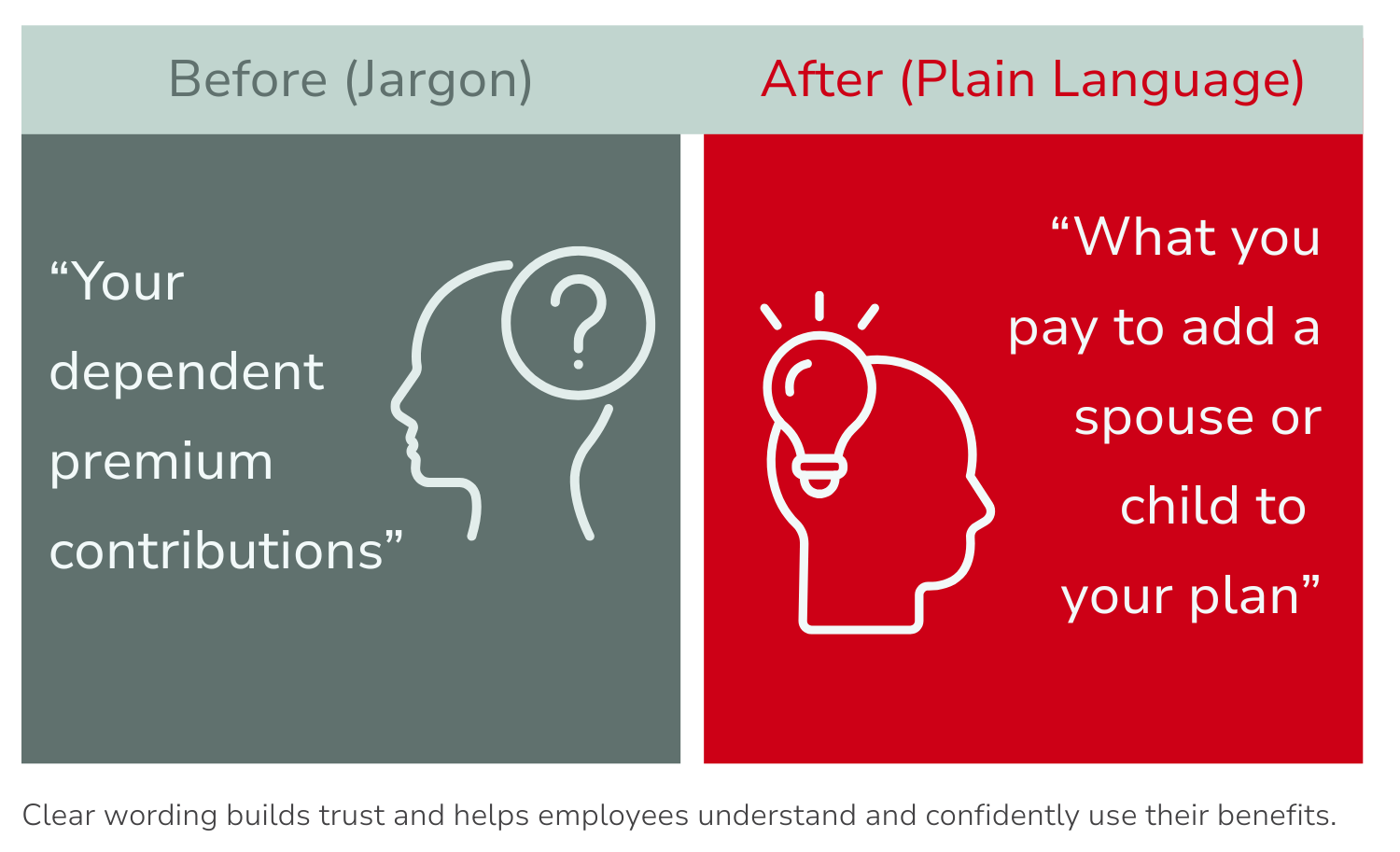
The starting point is clarity. Many employees do not speak insurance or premium tiers as a second language. Jargon creates friction and increases the odds they opt out, forget, or misuse benefits. The simpler your message, the more confident they can feel.
Replace technical terms with familiar ones. Instead of saying “dependent premium contributions,” say “how much you pay to add a spouse or child to your plan.” That small shift can build trust and understanding.
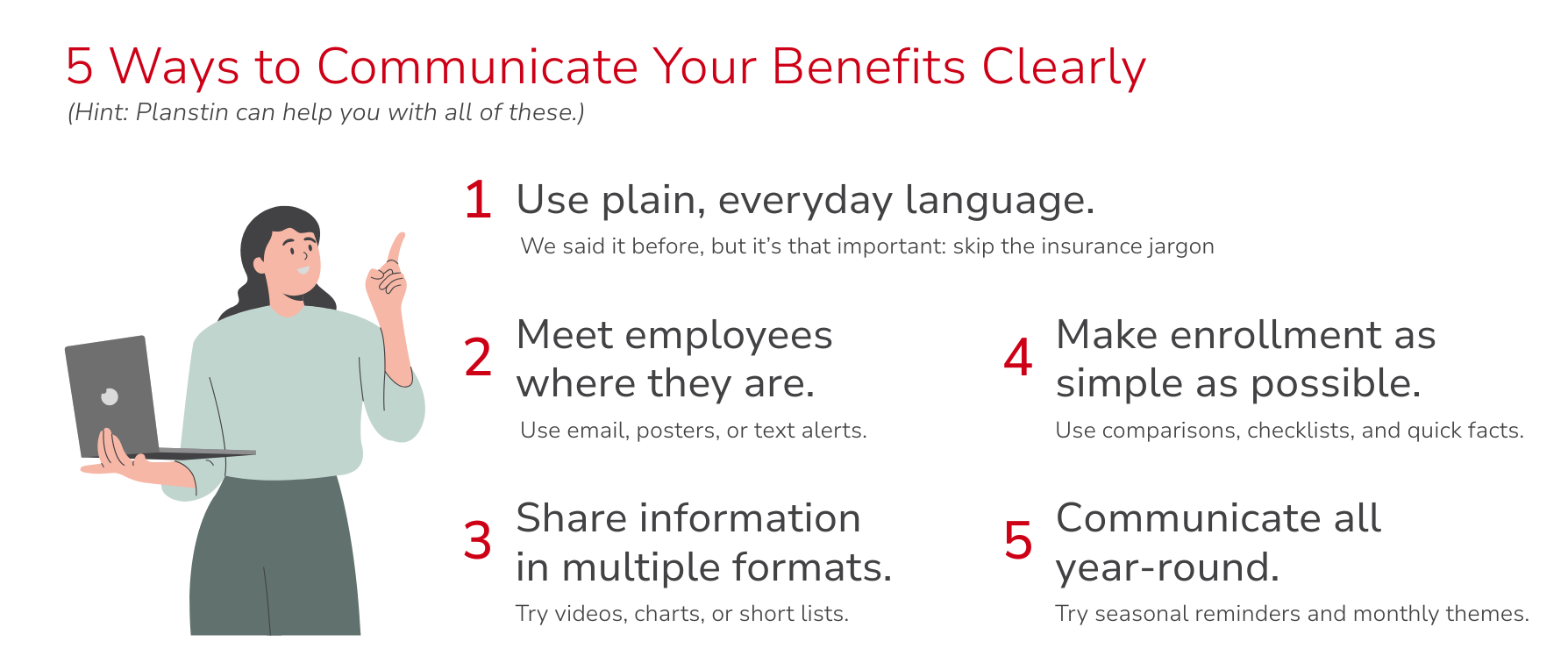
You can also vary how you deliver information. A short video, a visual comparison chart, or a quick “top five things to know” list can help people remember. Employees appreciate when you respect their time and make information easy to digest.
Meet employees where they are
Even the best message can miss the mark if it lives in the wrong place. Teams, departments, and generations absorb information differently. Some employees prefer an email newsletter, while others are more likely to watch a short video or glance at a poster in the breakroom.
A multi-channel strategy helps reach everyone. Share updates through your intranet, HR portal, team meetings, or even text notifications for quick reminders. Consistency matters more than volume. Seeing the same, clear message in familiar places helps employees absorb and retain information.
Benefits communication is most effective when it continues all year, not just during open enrollment. Ongoing reminders show that your company’s support is consistent, not seasonal.
Lead with what matters to them
Every employee silently asks, “How does this help me?” Your communication should answer that question right away. Lead with what impacts real life: saving money, simplifying care, and supporting family needs.
Employees care about convenience. For example, highlight that telehealth means talking to a provider after hours, or that preventive screenings are covered at no extra cost. Stories make benefits tangible.
Different age groups and life stages value different things. Young professionals may want student loan help or wellness perks. Parents may prioritize family coverage and flexible scheduling. Near retirees may focus on long-term savings and supplemental plans. Tailoring the message helps each person see what matters most to them.
A recent Aon piece outlines approaches for a multigenerational workforce: Improving Benefit Communication for a Multigenerational U.S. Workforce
Roll out changes with purpose
When new benefits are introduced or existing ones change, clarity and transparency are key. Start with the reason behind the change. If an update lowers costs, expands access, or adds a new resource, lead with that message. Employees are more open to change when they understand its purpose.
Follow up with a simple outline of what’s new, what employees need to do, and where they can get help. Use FAQs, quick guides, and short walkthroughs to reduce confusion. Avoid overwhelming employees with all the details at once; focus on what directly affects them first.
Make enrollment feel simple
Enrollment can be a stressful process. Too many choices or unclear instructions can cause frustration. Simplify the process with a guided experience and clear next steps.
Provide side-by-side comparisons, short summaries, and examples of who might benefit from each option. A simple checklist and one online hub for all resources can make a big difference. When employees feel guided and supported, enrollment becomes an opportunity to engage, not a chore.
Keep the conversation going
Benefits are not a once-a-year topic. Regular reminders and ongoing communication keep employees aware and engaged. A quarterly or monthly benefits theme helps maintain visibility without overwhelming your audience.
For example, one month could highlight preventive care and checkups, while another might focus on financial wellness or telehealth options. Link messages to timely events, such as back to school for family plans or flu season for preventive care. This shows that benefits communication is woven into the rhythm of work life, not separate from it.
Invite dialogue and listen
Strong communication goes both ways. Give employees space to ask questions, share feedback, or express what they find confusing. Open dialogue builds trust and allows HR teams to identify pain points early.
A dedicated inbox, anonymous feedback form, or monthly office hours can make this process easy. Involving leadership also helps. When managers reinforce messages and share their own experiences, employees listen. This effort toward alignment shows that benefits are part of your workplace culture, not just an HR function.
Measure, learn, improve
Like any core process, benefits communication should be reviewed and refined. Track engagement across channels, measure which resources employees use most, and survey what was helpful or confusing. These insights allow you to adapt your strategy year after year.
Metrics like portal logins, video views, and email open rates reveal what captures attention. If engagement drops after open enrollment, consider adding lighter touchpoints throughout the year. Over time, you’ll discover the cadence and formats that resonate best with your workforce.
For additional insights, explore SHRM’s report here: Efforts to Communicate Benefits Are Underwhelming, Report Finds
Final thoughts
Effective benefits communication is not a single campaign but a continuous cycle. Start with clarity, use channels employees trust, lead with value, roll out change with purpose, make action simple, and keep the dialogue alive. When employees understand and use their benefits, your investment becomes part of your culture and your people feel supported year round.
Need help building a benefits plan or communication strategy? Let’s talk.
Explore
SUGGESTED FOR YOU